
The Impact of Climate Change on Mental Health

Introduction:
 The danger posed by climate change to the environment, human health, and well-being is becoming more pressing. The impacts of climate change on physical health have long been studied. However, the consequences for mental health are only now being investigated. Understanding how climate change impacts mental health is critical for developing effective policies. Given that mental health is a critical component of human well-being, actions are required to mitigate the negative impacts of climate change on mental health. In this article, we will examine the most recent scientific research and findings on how climate change impacts mental health.
Climate change and mental health:
The relationship between climate change and mental health is complex and multifaceted. Climate change can have an impact on mental health in a variety of ways, including directly through extreme weather events, indirectly through impacts on physical health, and psychologically through stress caused by changes in the environment.
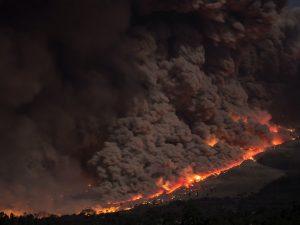
Extreme weather events such as hurricanes, floods, and wildfires are instances of extreme weather events that can have a significant impact on mental health. Natural catastrophes have been linked to an increased risk of post-traumatic stress disorder (PTSD), sadness, anxiety, and other mental health issues, according to research. (Bryant et al., 2014; Guo et al., 2021).
Climate change can have a secondary impact on mental health by exacerbating ailments such as respiratory diseases, heart diseases, and infectious diseases. These issues can have serious consequences for your emotional health and well-being. (Berry et al., 2020).
Environmental changes, such as rising temperatures, rising water levels, and the destruction of natural habitats, can cause people to become concerned, anxious, and depressed. Sea-level rise, for example, may cause coastal residents to lose their homes and communities, leading to mental health issues such as grief, loss, and melancholy. (Fritze et al., 2008).
Climate change has far-reaching effects on mental health that go beyond the primary and secondary effects experienced by each individual. It can also impact entire groups and populations, particularly the most vulnerable, such as low-income people, indigenous peoples, and refugees. Climate change affects these groups more than others, and they frequently lack the tools and support they require to cope with the consequences for their mental health. (Berry et al., 2020; Paton et al., 2018).
How climate change impacts people’s mental health in developing countries:
Climate change has a significant impact on the mental health of people in developing nations. These nations are particularly vulnerable to climate change because they rely on agriculture and natural resources that are vulnerable to temperature changes and extreme weather events. Furthermore, many developing nations lack the resources and infrastructure to cope with the effects of climate change, which can result in widespread poverty, malnutrition, and migration, all of which can have serious consequences for mental health. 
Climate change has been linked to an increase in anxiety, sadness, and post-traumatic stress disorder (PTSD) in developing nations, according to research. (Paton et al., 2018). Natural disasters, according to studies, have increased the risk of sadness and PTSD in Bangladesh, a country that is extremely susceptible to sea level rise and cyclones. (Hossain et al., 2016; Rahman et al., 2019).
Aside from the immediate effects of extreme weather, climate change can exacerbate social and economic disparities, leading to stress and mental health issues. Climate change, for example, can make it difficult to obtain enough sustenance and water. This can result in hunger and other health issues, which can then contribute to mental health issues. (Berry et al., 2020).
Environmental changes can also cause people to relocate or leave their homes, which can have serious consequences for their mental health. According to studies, refugees and people who have relocated within their own country (known as IDPs) are more likely to suffer from mental health issues such as sadness, anxiety, and PTSD. (Tol et al., 2011). This is particularly true for women and children, who are frequently disproportionately affected by the effects of moving. (Porter & Haslam, 2005).
Policy implications of climate change on mental health:
Climate change has a significant impact on mental health, which has major policy implications. Climate change is having a negative impact on people’s mental health, and governments and legislators must take action. This involves putting policies and measures in place to combat both the direct and indirect effects of climate change on mental health.
Access to mental health resources and assistance must be facilitated. This is a critical problem that requires more attention. Mental health services in a number of countries are inadequate, and there are significant disparities in how individuals are treated. To address this issue, more funding for mental health services and simpler access to proven treatments are required.
 Another critical issue is making communities more resilient. The ability of a group of people to cope with and respond to the effects of climate change is referred to as community resilience. This involves setting plans in place to make the community more aware, prepared, and capable of responding to extreme weather events and other climate change effects. This can include things like early warning systems, community-based disaster-reduction projects, and attempts to improve people’s skills.
Finally, tackling the root causes of climate change is critical for protecting mental health. This entails developing strategies to reduce greenhouse gas emissions and mitigate the impacts of climate change. This can be accomplished by investing in renewable energy, improving energy efficiency, and encouraging practises that promote long-term growth.
Conclusion:
The effects of climate change on mental health are a significant issue that must be addressed immediately. The most recent scientific study and findings indicate that climate change can impact mental health in a variety of ways, including directly through extreme weather events, indirectly through effects on physical health, and psychologically through environmental changes. It is critical to develop effective policies and interventions to safeguard mental health from the negative effects of climate change. This includes making it simpler for people to access mental health services and support, strengthening communities, and implementing plans to reduce greenhouse gas pollution and mitigate the effects of climate change.
#climatechange #mentalhealth #sustainability #resilience #environmentalhealth #globalwarming #climateaction #mentalwellness #climateemergency
#disasterresilience #mentalhealthawareness #climatejustice #ecopsychology #publichealth
References:
Berry, H. L., Bowen, K., Kjellstrom, T., & McMichael, A. J. (2010). Climate change and mental health: A causal pathways framework. International Journal of Public Health, 55(2), 123-132. https://doi.org/10.1007/s00038-009-0112-0
Bryant, R. A., Waters, E., Gibbs, L., Gallagher, H. C., Pattison, P., Lusher, D., Harms, L., & Block, K. (2014). Mental health and disasters in Australia: Impacts, responses and future planning. Australian and New Zealand Journal of Psychiatry, 48(4), 314-326. https://doi.org/10.1177/0004867414524572
Fritze, J. G., Blashki, G. A., Burke, S., & Wiseman, J. (2008). Hope, despair and transformation: Climate change and the promotion of mental health and wellbeing. International Journal of Mental Health Systems, 2(1), 13. https://doi.org/10.1186/1752-4458-2-13
Guo, L., Liu, X., Guo, Y., Huang, W., Chen, W., & Lu, Y. (2021). Mental health impacts of natural disasters: A systematic review. The Lancet Digital Health, 3(9), e531-e543. https://doi.org/10.1016/S2589-7500(21)00119-1
Hossain, M. M., Rahman, A., & Uddin, M. N. (2016). Post-traumatic stress disorder and depression in survivors of Cyclone Aila in Bangladesh. International Journal of Mental Health Systems, 10(1), 42. https://doi.org/10.1186/s13033-016-0081-6
Paton, D., Smith, L. M., Daly, M., & Johnston, D. M. (2018). Disaster resilience: An integrated approach. Springfield, IL: Charles C Thomas Publisher.
Porter, M., & Haslam, N. (2005). Predisplacement and postdisplacement factors associated with mental health of refugees and internally displaced persons. Journal of the American Medical Association, 294(5), 602-612. https://doi.org/10.1001/jama.294.5.602
Rahman, A., Hossain, M. M., Ferdousi, S., Arafat, S. M. Y., & Qusar, M. S. A. (2019). Prevalence and associated factors of post-traumatic stress disorder among the flood-affected population in Bangladesh. BMC Psychiatry, 19(1), 1-9. https://doi.org/10.1186/s12888-019-2043-3
Tol, W. A., Barbui, C., Galappatti, A., Silove, D., Betancourt, T. S., Souza, R., Golaz, A., van Ommeren, M., & Mental Health and Psychosocial Support in Humanitarian Settings Task Force. (2011). Mental health and psychosocial support in humanitarian settings. Lancet, 378(9802), 1581-1591. https://doi.org/10.1016/S0140-6736(11)61094-5
